If you or a loved one are getting ready for cataract surgery, this is probably the question on your mind: will it actually work, 100%? It’s a fair thing to ask before any surgery, and you deserve an honest answer — not just a reassuring one.
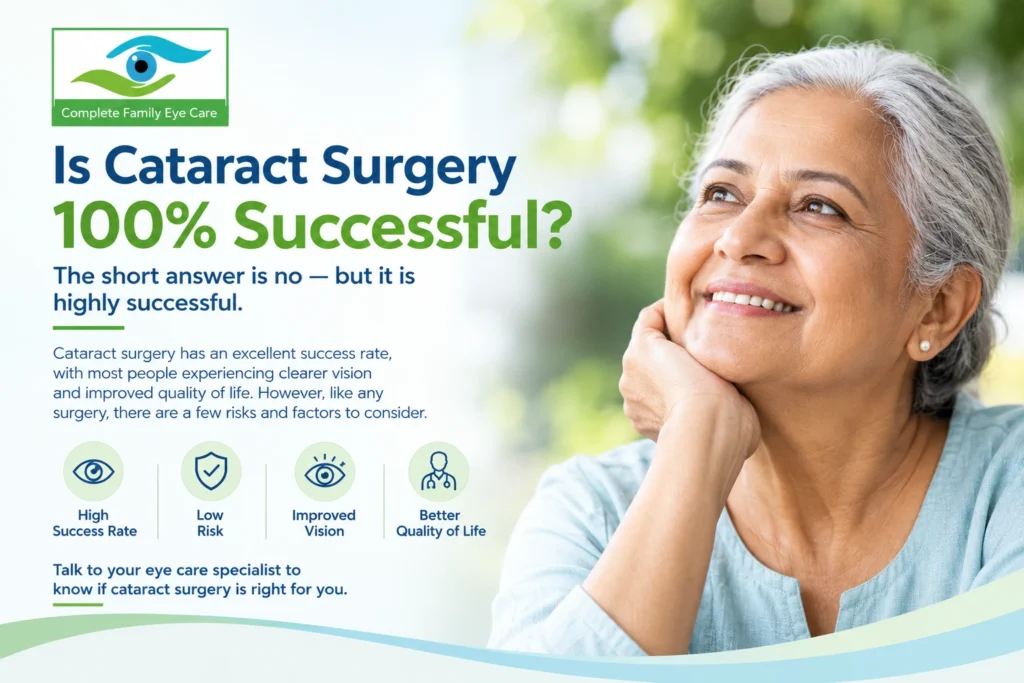
Quick answer: No surgery is ever 100% successful for every single patient, and cataract surgery is no exception. But it is one of the safest, most predictable, and most successful surgeries performed anywhere in medicine today. The vast majority of patients see a dramatic improvement in their vision, often achieving 20/20 or near-perfect vision within days.
Let’s break down what “success” really means here, what the real numbers look like, and what can affect your outcome.
What Does “Success” Actually Mean in Cataract Surgery?
When doctors talk about a “successful” cataract surgery, they usually mean:
- The cloudy natural lens has been safely removed
- A clear artificial intraocular lens (IOL) has been placed
- Your vision has improved significantly compared to before surgery
- There are no serious complications during or after the procedure
Success doesn’t always mean perfect 20/20 vision for everyone — some patients may still need glasses for reading or distance, especially if they have other eye conditions like glaucoma or macular degeneration. But for the vast majority, cataract surgery restores vision clear enough to drive, read, and go about daily life without the haze that cataracts caused.
How Successful Is Cataract Surgery, Really?
Cataract surgery is widely regarded as one of the most effective and lowest-risk surgical procedures in modern medicine. Most patients experience significant vision improvement, and serious complications are uncommon. Millions of these procedures are performed every year across the world, which has helped refine the technique into something very safe and predictable.
That said, “very safe” isn’t the same as “zero risk.” A small percentage of patients may experience issues such as infection, inflammation, or a secondary clouding of the lens capsule (posterior capsule opacification) months or years later — this last one is common and easily fixed with a quick, painless laser procedure.
Factors That Affect the Success of Your Surgery
Your individual outcome depends on several things:
- Overall eye health — conditions like glaucoma, diabetic retinopathy, or macular degeneration can limit how much vision improves
- Severity of the cataract — very advanced or “mature” cataracts can be more complex to operate on
- Surgeon’s experience and technique — precision matters, especially with modern techniques like phacoemulsification and laser-assisted surgery
- Type of IOL chosen — monofocal, multifocal, or toric lenses each offer different outcomes depending on your lifestyle needs
- Post-surgery care — following your doctor’s instructions on eye drops, rest, and follow-up visits plays a big role in healing
What Could Go Wrong? (And How Rare Is It?)
It’s natural to want to know the risks too. Possible complications include infection, swelling, retinal detachment, or lens displacement — but these are uncommon, especially when surgery is performed by an experienced ophthalmologist using modern equipment and sterile protocols. Most issues, when they do occur, are treatable if caught early, which is why follow-up visits after surgery matter so much.
How Jeevan Jyoti Eye Hospital Ensures the Best Possible Outcomes
At Jeevan Jyoti Eye Hospital, we understand that your vision isn’t just a medical concern — it’s your independence, your work, and your daily life. Our approach to cataract surgery focuses on:
- Thorough pre-surgery eye evaluation to choose the right lens and technique for you
- Experienced surgeons using advanced, minimally invasive methods
- Personalized lens options based on your lifestyle and visual needs
- Dedicated post-operative care and follow-up to catch and manage any issues early
This combination of careful planning and experienced execution is what consistently delivers high success rates for our patients in Lucknow.
No surgery can honestly promise a 100% guarantee — and any that does should raise questions. What cataract surgery can promise is one of the highest success rates in all of medicine, backed by decades of refinement, modern technology, and experienced surgical teams. For most patients, it means saying goodbye to blurry, clouded vision and getting their clear sight back.
If you’re considering cataract surgery or just want to understand your options better, Jeevan Jyoti Eye Hospital’s cataract surgery page is a good next step, or you can book a consultation directly with our team in Lucknow.