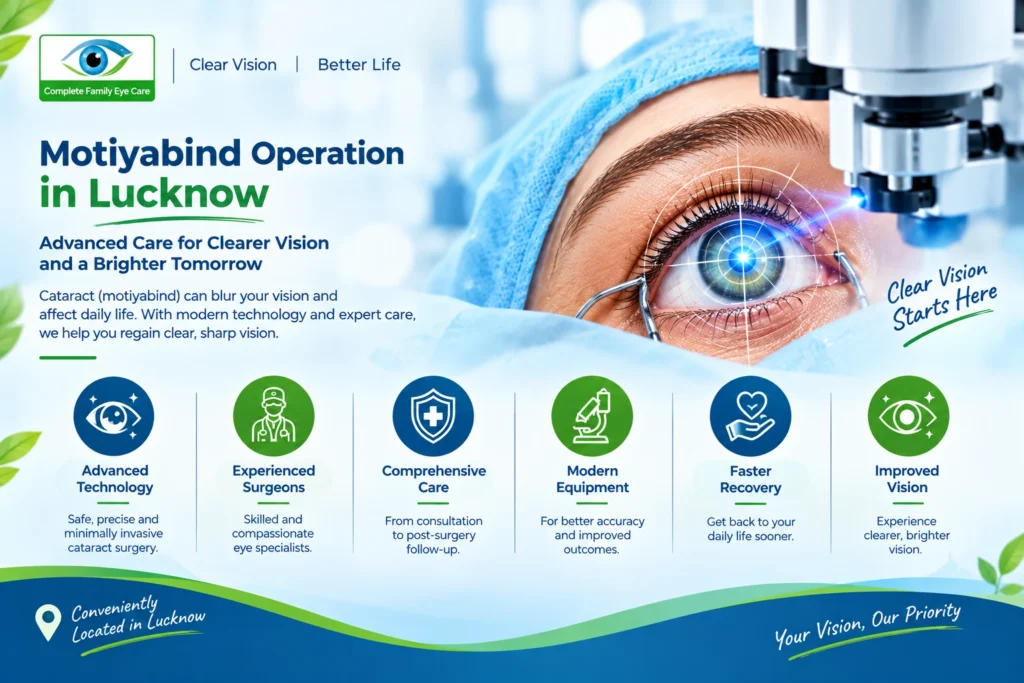
Cataract, commonly known as Motiyabind, is one of the most common eye conditions affecting people as they age. It causes the natural lens of the eye to become cloudy, leading to blurred vision, difficulty seeing at night, and sensitivity to light. The good news is that a Motiyabind operation in Lucknow is now a quick, safe, and highly effective procedure that can restore clear vision within days.
At Jeevan Jyoti Eye Hospital, we see patients every day who have been living with blurry vision for months, simply because they weren’t sure when or where to get treated. This blog will walk you through everything you need to know before undergoing a Motiyabind operation — from symptoms and procedure types to recovery and cost.
What is Motiyabind (Cataract)?
Motiyabind develops when the proteins in the eye’s natural lens clump together, causing cloudiness. It usually develops slowly and is most common in people above 50, although it can also occur due to diabetes, injury, prolonged steroid use, or genetic factors. Common symptoms include:
- Blurred or hazy vision
- Difficulty seeing clearly at night
- Colors appearing faded or yellowish
- Increased sensitivity to bright light or glare
- Frequent changes in spectacle power
If left untreated, cataract can significantly affect daily activities like reading, driving, or recognizing faces.
Motiyabind Operation: How the Procedure Works
Modern Motiyabind operation techniques have made cataract surgery one of the safest and most successful surgeries performed today. The most common method used is Phacoemulsification, a bladeless, stitch-less procedure where the clouded lens is broken down using ultrasound energy and gently removed. An artificial intraocular lens (IOL) is then placed to restore clear vision.
The entire procedure typically takes 15–20 minutes and is performed under local anesthesia (usually just eye drops), meaning there’s no need for injections or general anesthesia in most cases. Most patients go home the same day and notice a visible improvement in vision within 24–48 hours.
At Jeevan Jyoti Eye Hospital, our surgical team uses advanced phaco machines and a wide range of IOL options (monofocal, multifocal, and toric lenses) so that patients can choose based on their lifestyle and visual needs. You can learn more about the procedure in detail on our cataract surgery page.
Motiyabind Operation Cost in Lucknow
One of the most common questions patients ask is about the Motiyabind operation cost in Lucknow. The cost of cataract surgery can vary quite a bit depending on several factors:
- Type of surgery – standard phacoemulsification vs. advanced laser-assisted surgery
- Type of intraocular lens (IOL) used – basic monofocal lenses are more affordable, while premium multifocal or toric lenses cost more but reduce dependency on glasses
- Hospital infrastructure and surgeon expertise
- Pre- and post-operative care included in the package
- Whether both eyes need surgery
In Lucknow, cataract surgery costs can broadly range from a few thousand rupees for basic IOLs under government or subsidized schemes, up to significantly higher amounts for premium lens options at private hospitals. Because pricing depends so much on individual eye condition and lens choice, it’s always best to get a personalized quote after an eye examination.
At Jeevan Jyoti Eye Hospital, we offer transparent pricing and multiple lens options to suit different budgets, along with complete guidance so patients can make an informed decision without any confusion.
Preparing for Your Motiyabind Operation
Before surgery, your ophthalmologist will conduct a detailed eye examination, including tests to measure the exact power of the artificial lens needed. A few general preparation tips:
- Avoid eating heavy meals a few hours before surgery if advised
- Inform your doctor about any existing conditions like diabetes or blood pressure
- Arrange for someone to accompany you, as you won’t be able to drive immediately after
- Contin
- ue any prescribed eye drops as instructed before the procedure
Recovery After Cataract Surgery
Recovery from a Motiyabind operation is usually quick and comfortable. Most patients can resume light daily activities within a day or two. However, a few precautions help ensure smooth healing:
- Use prescribed eye drops regularly to prevent infection and inflammation
- Avoid rubbing or pressing the operated eye
- Wear the protective eye shield, especially while sleeping, for the first few nights
- Avoid dusty environments, swimming, and heavy exercise for a couple of weeks
- Attend all follow-up appointments so your doctor can monitor healing
Most people experience noticeably clearer vision within a few days, with full stabilization over a few weeks.
Why Choose Jeevan Jyoti Eye Hospital for Your Motiyabind Operation in Lucknow
Choosing the right hospital makes a big difference in both surgical outcomes and overall experience. At Jeevan Jyoti Eye Hospital, we combine experienced ophthalmic surgeons, modern surgical technology, and a patient-first approach to make your cataract treatment journey smooth and stress-free.
Whether you’re exploring your options or ready to schedule your surgery, our team is here to guide you at every step — from diagnosis to post-operative care. To understand the procedure further or book a consultation, visit our cataract surgery page.
If your vision has started feeling hazy or you’ve been putting off that eye check-up, don’t wait too long. Book a consultation at Jeevan Jyoti Eye Hospital today and take the first step toward clear, confident vision.