
Cataract Surgery
Eyesight Protection from the Effects of Diabetes on Eyes
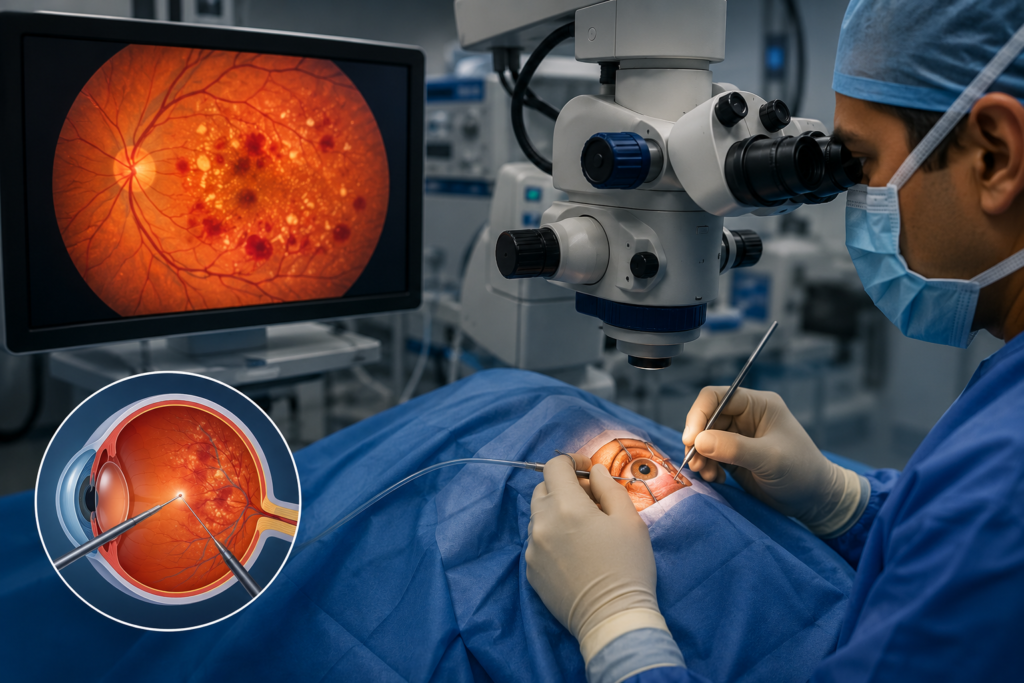
It’s not only about high blood glucose levels; diabetes can damage your eyes too. Diabetic retinopathy is one of the main causes of blindness in adults, which doesn’t show any symptoms until the late stages of the disease. Jeevan Jyoti Eye Hospital offers comprehensive diabetic retinopathy Surgery in Lucknow, from diabetes eye tests to laser and surgical procedures of diabetic retinopathy, supervised by Dr Paramjeet Singh.
If you are diagnosed with diabetes, even without any symptoms of visual impairment, you may save your sight with an eye checkup.
What is Diabetic Retinopathy?
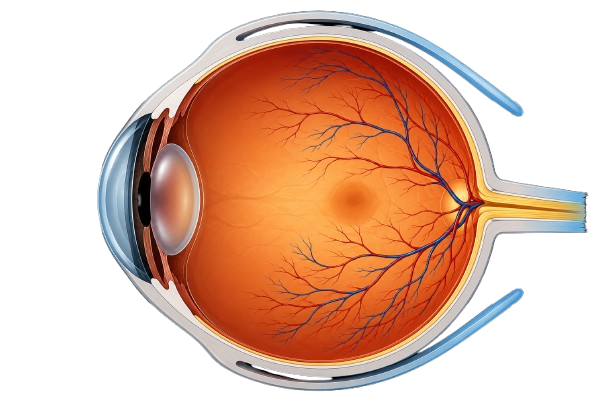
Diabetic retinopathy is a condition associated with diabetes that causes damage to the retina, a part of the back of the eye involved in vision. Diabetic retinopathy affects patients who have a longstanding type 1 or type 2 diabetes and is one of the most common diabetic complications of the eyes.
Diabetic Retinopathy: Pathophysiology
Knowledge of the pathophysiology of diabetic retinopathy explains the importance of early diagnosis of this disease:
Persistently high blood glucose levels cause damage to small vessels supplying the retina.
Vessels damaged by the disease start to leak fluid and blood or close completely, depriving the retina of oxygen supply.
The retina deprived of oxygen (ischemia) starts to develop abnormal new vessels, known as neovascularisation.
Abnormal vessels tend to be fragile and poorly developed. They may haemorrhage into the eye, causing pulling or detachment of the retina.
Development of fluid accumulation next to the macula (central part of the retina) causes Diabetic Macular Edema (DME), the primary cause of vision loss among patients with diabetes.
This progressive development of the disease explains the term used for diabetic retinopathy – “spectrum”. – it worsens in stages if blood sugar and blood pressure remain uncontrolled and eye check-ups are skipped.
Diabetic Retinopathy: Types and Stages
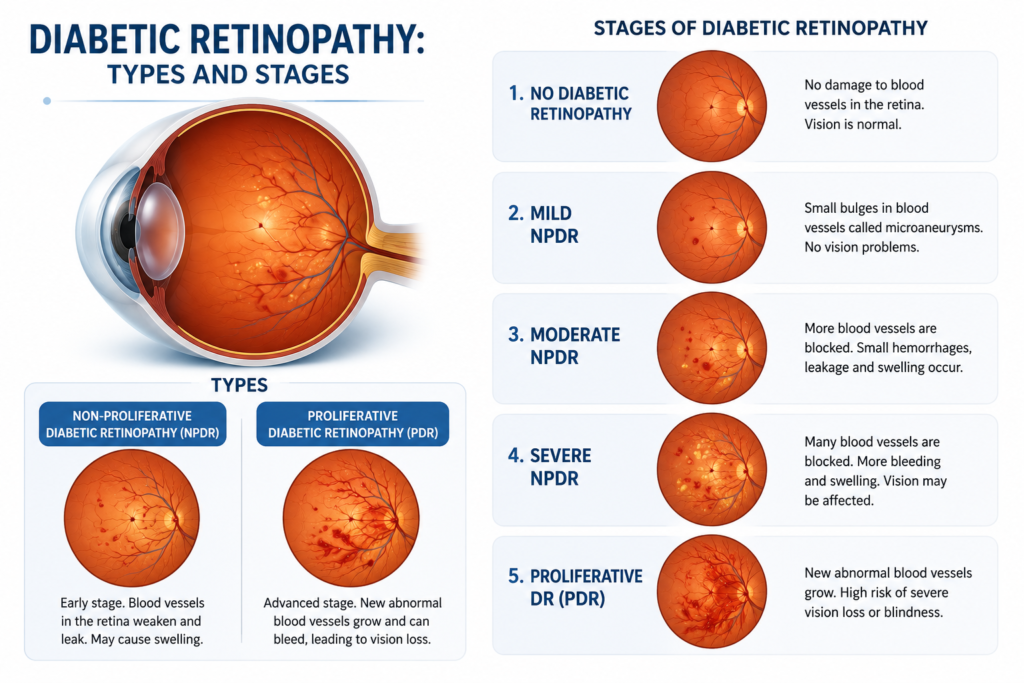
There are two broad diabetic retinopathy types, based on how far the disease has progressed:
1. Non-Proliferative Diabetic Retinopathy (NPDR)
The early stage, where blood vessels in the retina weaken and leak but no new abnormal vessels have formed yet. NPDR is further classified as mild, moderate, or severe depending on the extent of retinal damage seen during examination.
2. Proliferative Diabetic Retinopathy (PDR)
The advanced stage, where the retina starts growing new, fragile blood vessels due to oxygen deprivation. PDR carries a high risk of vitreous haemorrhage (bleeding inside the eye) and retinal detachment, and often requires diabetic retinopathy surgery to prevent permanent blindness.
Diabetic Macular Edema (DME)
This can occur at any stage of retinopathy and involves fluid build-up in the macula, causing blurred or distorted central vision — affecting reading, recognising faces, and driving.

Diabetic Eye Problems Beyond Retinopathy
Diabetes can affect the eyes in several ways, not just the retina. Common diabetic eye problems we screen for at Jeevan Jyoti Eye Hospital include:
- Diabetic Retinopathy (NPDR & PDR)
- Diabetic Macular Edema (DME)
- Early and rapidly progressing Cataract
- Diabetic-related Glaucoma
- Fluctuating vision due to blood sugar swings
- Vitreous hemorrhage and, in advanced cases, tractional retinal detachment
Many of these conditions develop silently, which is why a dedicated diabetes eye check — not just a general vision test — is essential for anyone living with diabetes.
We Offer: Diabetic Retinopathy Surgery in Lucknow
Treatment depends on the type and stage of retinopathy, detected through a detailed dilated retinal examination, OCT (Optical Coherence Tomography), and fundus photography. At Jeevan Jyoti Eye Hospital, our diabetic retinopathy treatment options include:
Comprehensive Diabetic Retinal Screening Dilated fundus examination and imaging to detect even early, symptomless retinal changes.
Anti-VEGF Injections Intravitreal injections that reduce abnormal vessel growth and fluid leakage, commonly used for diabetic macular edema and proliferative retinopathy.
Laser Photocoagulation (PRP) Pan-retinal laser treatment that seals leaking vessels and controls abnormal vessel growth, reducing the risk of bleeding and vision loss in proliferative retinopathy.
Diabetic Retinopathy Surgery (Vitrectomy) For advanced cases — non-clearing vitreous hemorrhage, tractional retinal detachment, or dense scar tissue on the retina — a surgical procedure called vitrectomy is performed. This involves carefully removing blood or scar tissue from inside the eye to restore clarity and stabilise the retina.
Ongoing Monitoring Because diabetic retinopathy is a progressive condition tied to overall diabetes control, we schedule regular follow-up eye checks to track retinal health over time.
Why Choose Jeevan Jyoti Eye Hospital for Diabetic Retinopathy Care?
As a trusted eye specialist in Lucknow, Dr. Paramjeet Singh (MBBS, DNB Ophthalmology) brings years of clinical experience in diagnosing and managing diabetic eye disease, from routine screening to complex retinal surgery.
- Detailed dilated retinal examination and diabetic eye check
- Advanced retinal imaging and diagnostics under one roof
- Laser treatment, anti-VEGF injections, and vitrectomy surgery available
- Honest, unhurried consultations — treatment explained in plain language
- Clean, modern, easy-to-reach facility in LDA Colony, Lucknow
- Personalised follow-up plans coordinated with your diabetes management
Our approach is simple: listen first, explain clearly, and treat only what genuinely needs treatment.
Frequently Asked Questions
What is diabetic retinopathy?
Diabetic retinopathy is damage to the retina’s blood vessels caused by prolonged high blood sugar. It can lead to blurred vision, vitreous hemorrhage, or blindness if untreated.
What are the early signs of diabetic eye problems?
Early diabetic retinopathy often has no symptoms. As it progresses, patients may notice blurred vision, floaters, dark spots, or difficulty seeing at night. Regular diabetes eye checks catch damage before symptoms appear.
What are the main types of diabetic retinopathy?
The two main types are Non-Proliferative Diabetic Retinopathy (NPDR), the early stage, and Proliferative Diabetic Retinopathy (PDR), the advanced stage involving abnormal new blood vessel growth. Diabetic Macular Edema (DME) can occur alongside either type.
Is diabetic retinopathy surgery painful?
Vitrectomy is performed under anesthesia, so patients do not feel pain during the procedure. Some mild discomfort or irritation is normal during recovery and is managed with prescribed medication.
Can diabetic retinopathy be treated without surgery?
Yes. Many cases are managed with regular monitoring, anti-VEGF injections, or laser photocoagulation. Surgery (vitrectomy) is reserved for advanced cases with bleeding or retinal detachment risk.
How often should a diabetic get an eye check-up?
Most diabetics should have a dilated diabetes eye check at least once a year, even without symptoms. Those with existing retinopathy or poorly controlled diabetes may need more frequent monitoring.
Can diabetic retinopathy be reversed?
Existing retinal damage generally cannot be fully reversed, but treatment can stop further progression and, in many cases, preserve or improve remaining vision. This is why early diagnosis matters more than late-stage treatment.
Where can I find a reliable eye specialist in Lucknow for diabetic retinopathy?
Jeevan Jyoti Eye Hospital in LDA Colony, Lucknow, offers complete diabetic eye screening, laser treatment, injections, and retinal surgery under the care of Dr. Paramjeet Singh.